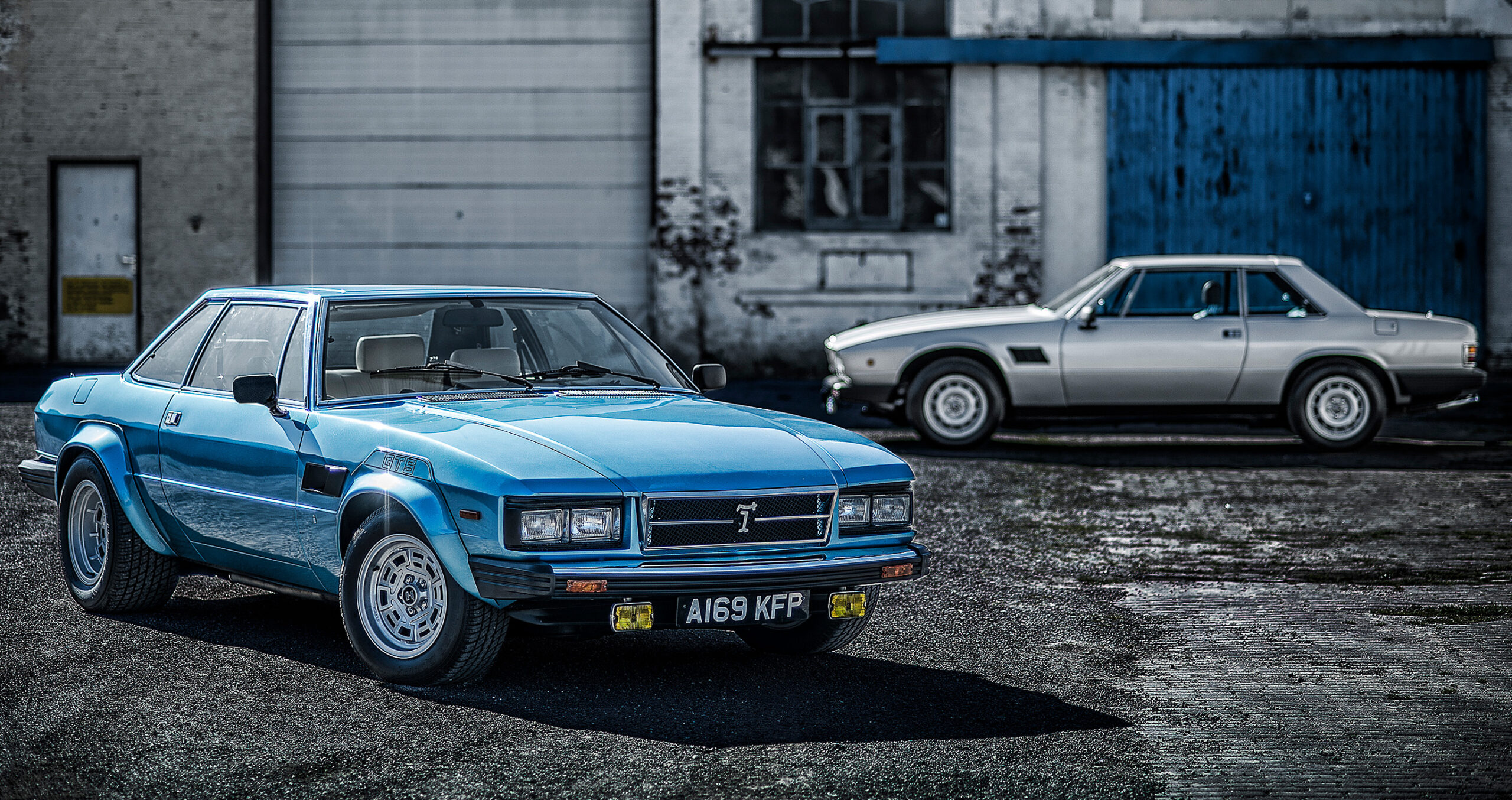
This multicultural duo is defined as much by their similarities as by their differences. The shared traits stem from an unexpected family bond, while the contrasts are rooted in engineering decisions that have as little in common as a Whopper from Burger King and a spaghetti Bolognese served in a restaurant in Emilia Romagna. At a glance, the De Tomaso Longchamp and Maserati Kyalami appear closely related and similar in their basic architecture. Yet, beneath that shared surface, they diverge in character and technical execution.
After making name with the mid-engined Vallelunga and Mangusta sports cars in the sixties, Argentine industrial entrepreneur Alejandro de Tomaso stepped firmly into supercar territory with the Pantera in 1971. Prior to that, at the 1970 Turin Motor Show, his Modenese company had already signalled a broader ambition with the Deauville, a luxury sedan designed to take on the established German and British elite. It was powered by a 351 Cleveland V8 from Ford, a 5.8 litre unit chosen less for romance than for necessity and already powering the Pantera. De Tomaso simply lacked the resources to develop its own engines and instead relied on the abundance and durability of American V8 power. When production began in 1971, sales of the Deauville proved slower than expected and de Tomaso started thinking about alternatives to increase revenue.
This article is exclusive to subscribers.
Already a subscriber? Log in.